Skip to content

Where Ocean, Dunes and Forest Meet

The Unique Ecology of Calanga, Mozambique
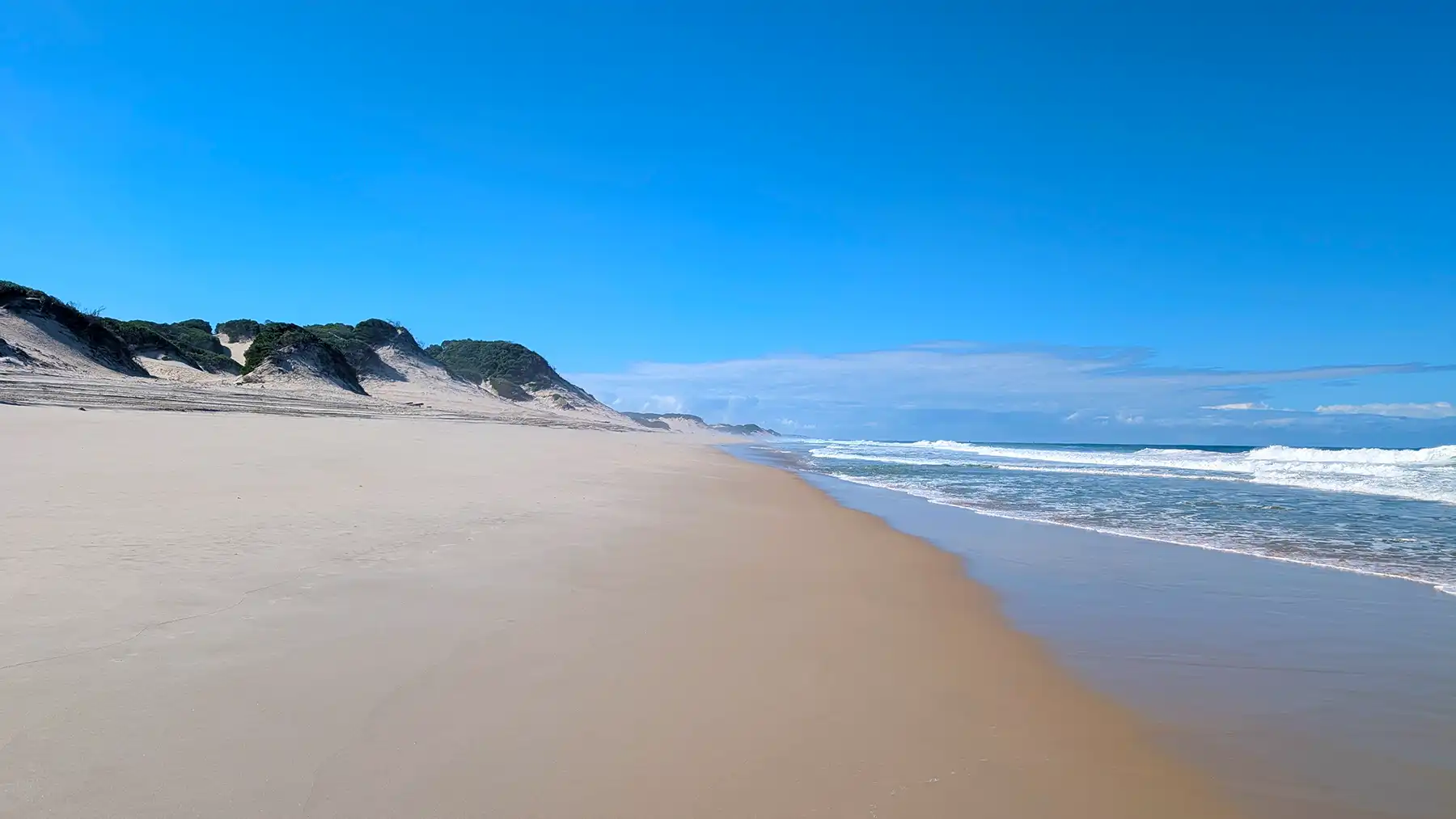
Where soft sands meet rolling dunes, Calanga’s wild coastline stretches endlessly under the warm, fading light.

If you’re looking for more than just a beach, Calanga delivers something truly rare. Tucked away on Mozambique’s southern coastline, this wild and remote stretch of shore is a place where multiple ecosystems collide within minutes of each other – open ocean, towering sand dunes, coastal forest, wetlands and freshwater lakes.

It’s this compact meeting of worlds that makes Calanga so special, and why it remains one of the most ecologically fascinating – and sensitive – coastlines in the region.
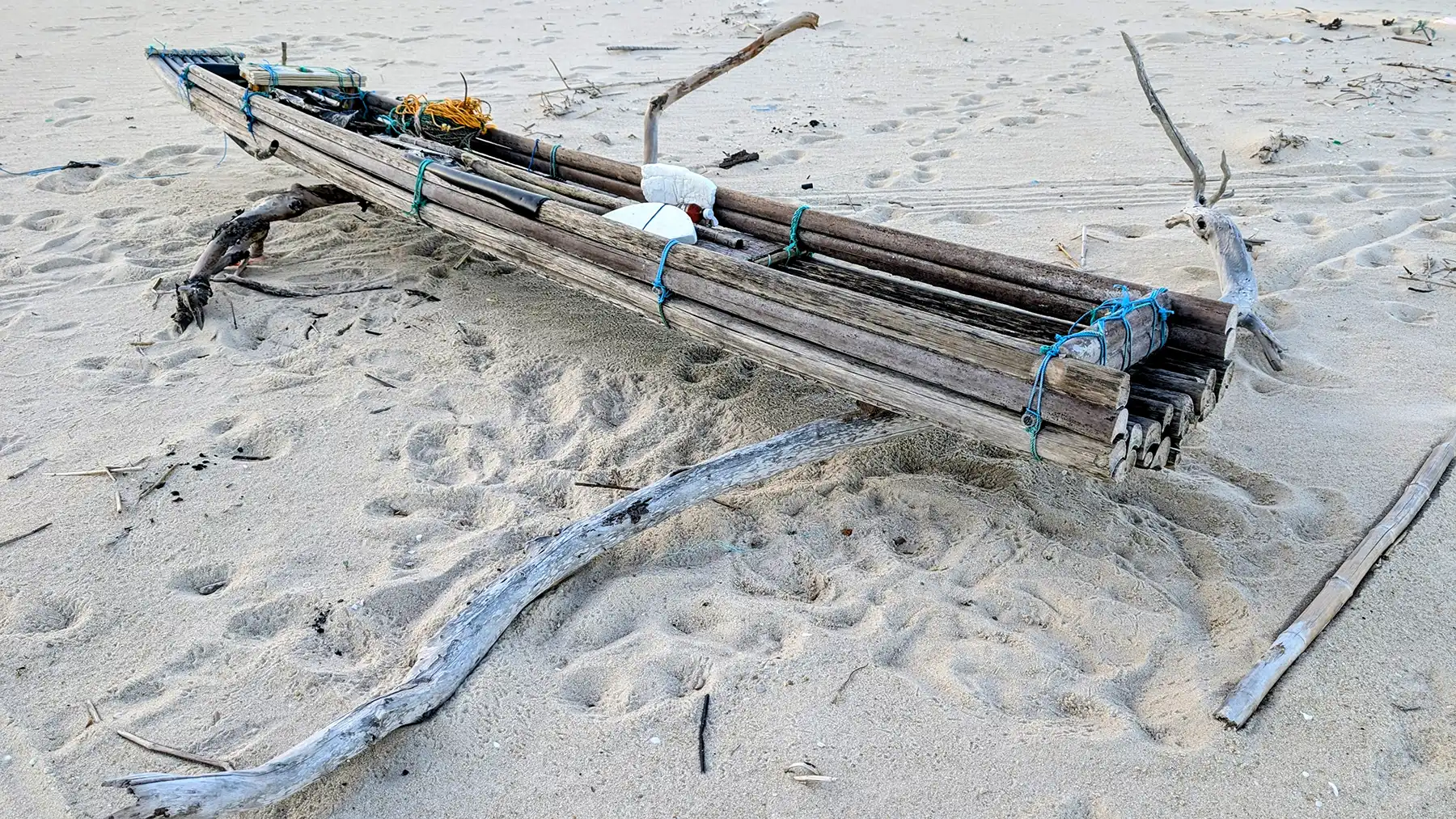
A handcrafted fishing boat of woven branches rests on the quiet beach, poised between tradition and tide, waiting for its fisherman to return to the sea.
🌊 A Coastline Unlike Any Other

Calanga’s long, empty beaches are backed by ancient dunes. Cross the dunes and you enter lush coastal forest growing directly on sand, with freshwater lakes and wetlands just beyond.

🐋 Life in the Ocean

Offshore waters host snappers, groupers and crustaceans. From July to September, humpback whales migrate past the coast, while endangered sea turtles nest on these remote beaches in summer.

🌴 Forests, Dunes & Freshwater

Dune forests, savanna and wetlands support rich birdlife, monkeys and other wildlife. Lagoa Phati provides calm freshwater habitats vital to both nature and local communities.
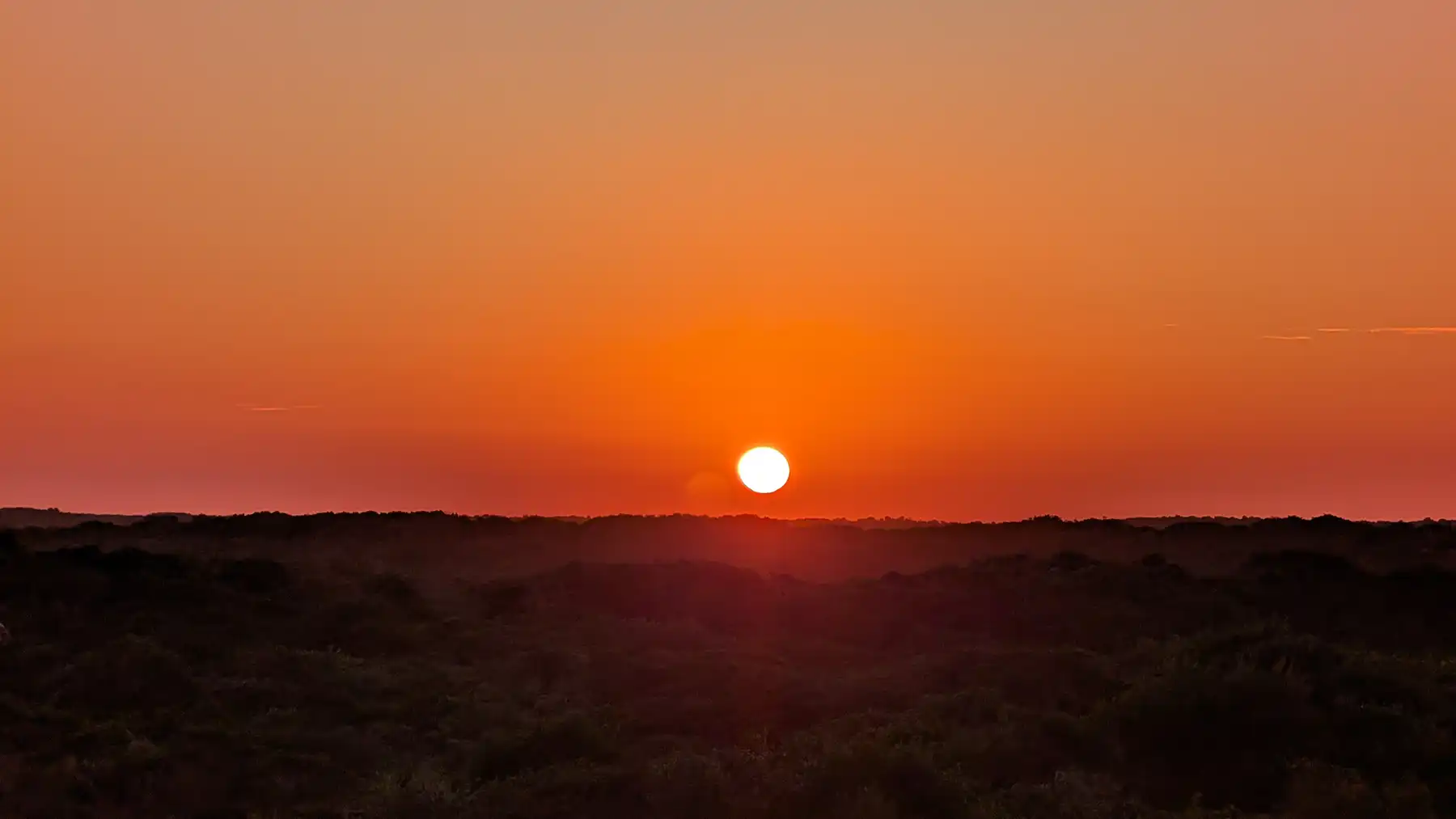
As the sun dips below the horizon, Calanga’s forest canopy glows in warm amber tones, marking the quiet transition from day to night.

Why Calanga Is Ecologically Sensitive

What makes Calanga extraordinary also makes it fragile. Dune systems are easily eroded, freshwater lakes are sensitive to pollution, and turtle nesting beaches can be disrupted by lights and noise.

With little large-scale development and no formal park status, the future of Calanga depends on respectful, low-impact travel and community-led conservation.
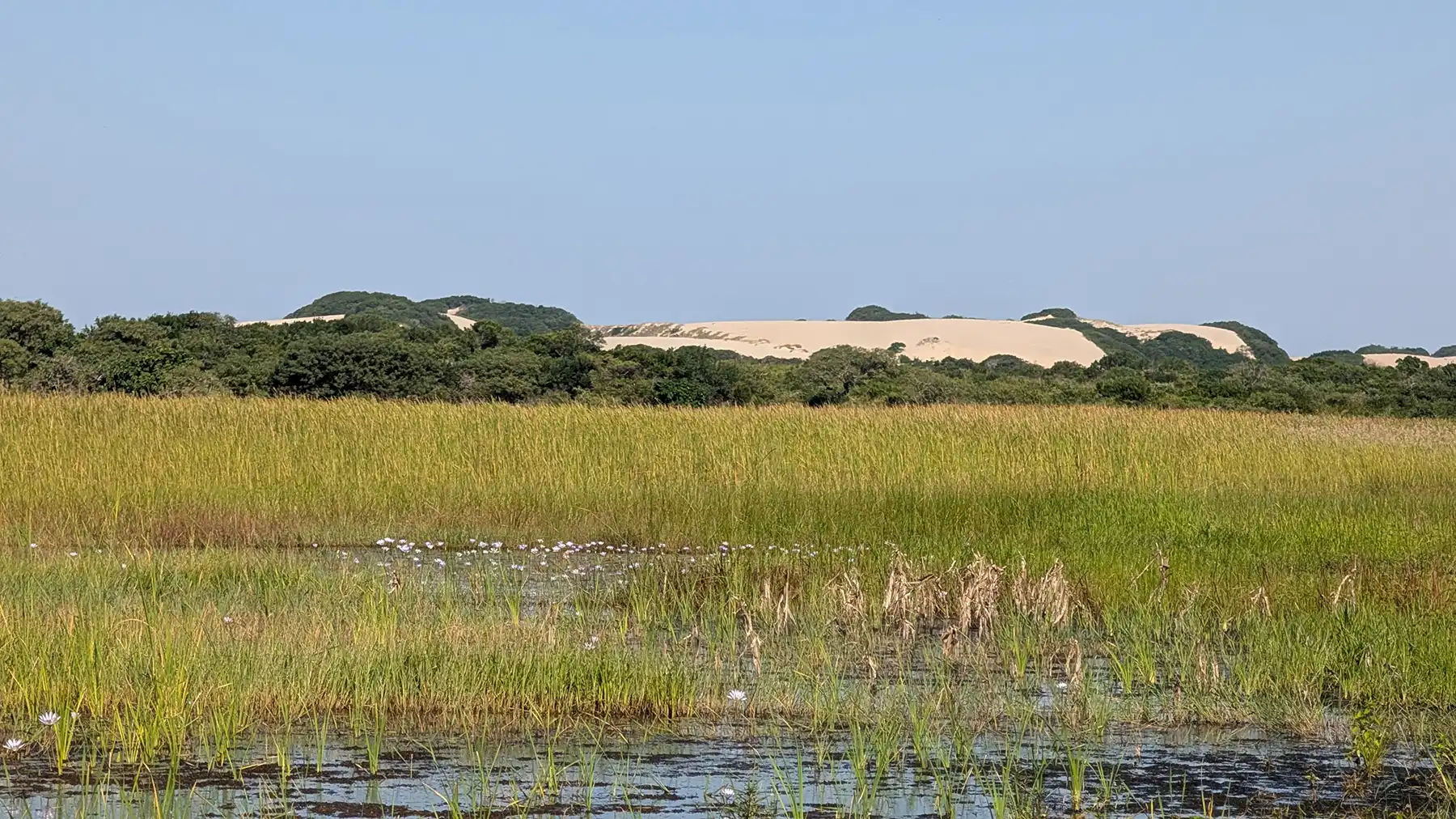
A hidden freshwater lake in Calanga reflects the soft afternoon light, framed by rolling golden dunes that rise quietly beyond the shore.

Responsible Tourism at Calanga

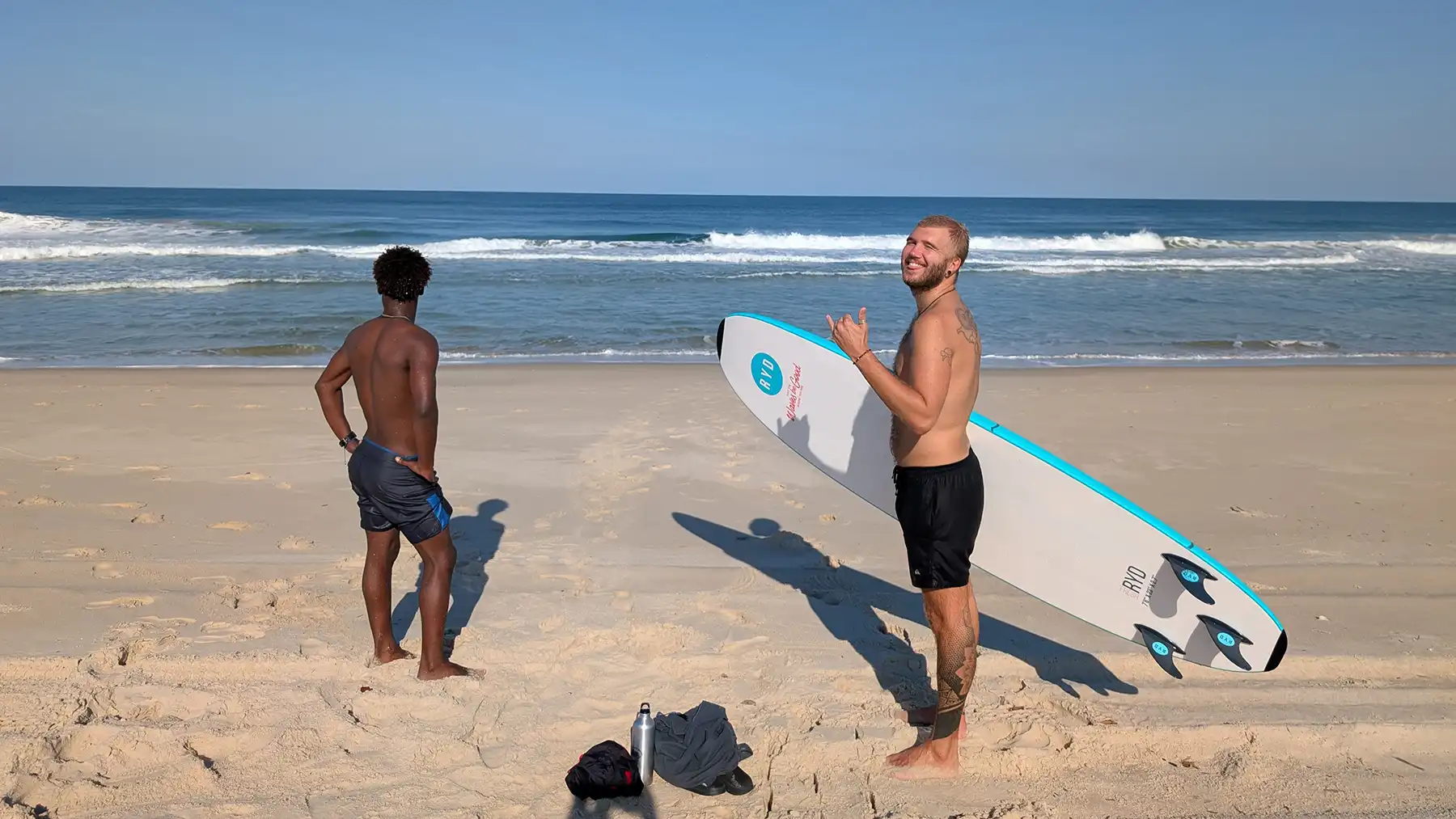
Two surfers pause on the quiet sands of Dune Beach Hostel, watching the late-afternoon swell roll in—anticipating the perfect moment to paddle out.

A Rare Meeting Point of Worlds

Calanga is not a polished destination – and that’s exactly its magic. Here, nature still sets the rules. At Dune Beach Hostel, you don’t just visit this landscape – you live inside it.

Calanga isn’t just a beach. It’s a rare meeting point of worlds – and one worth protecting.
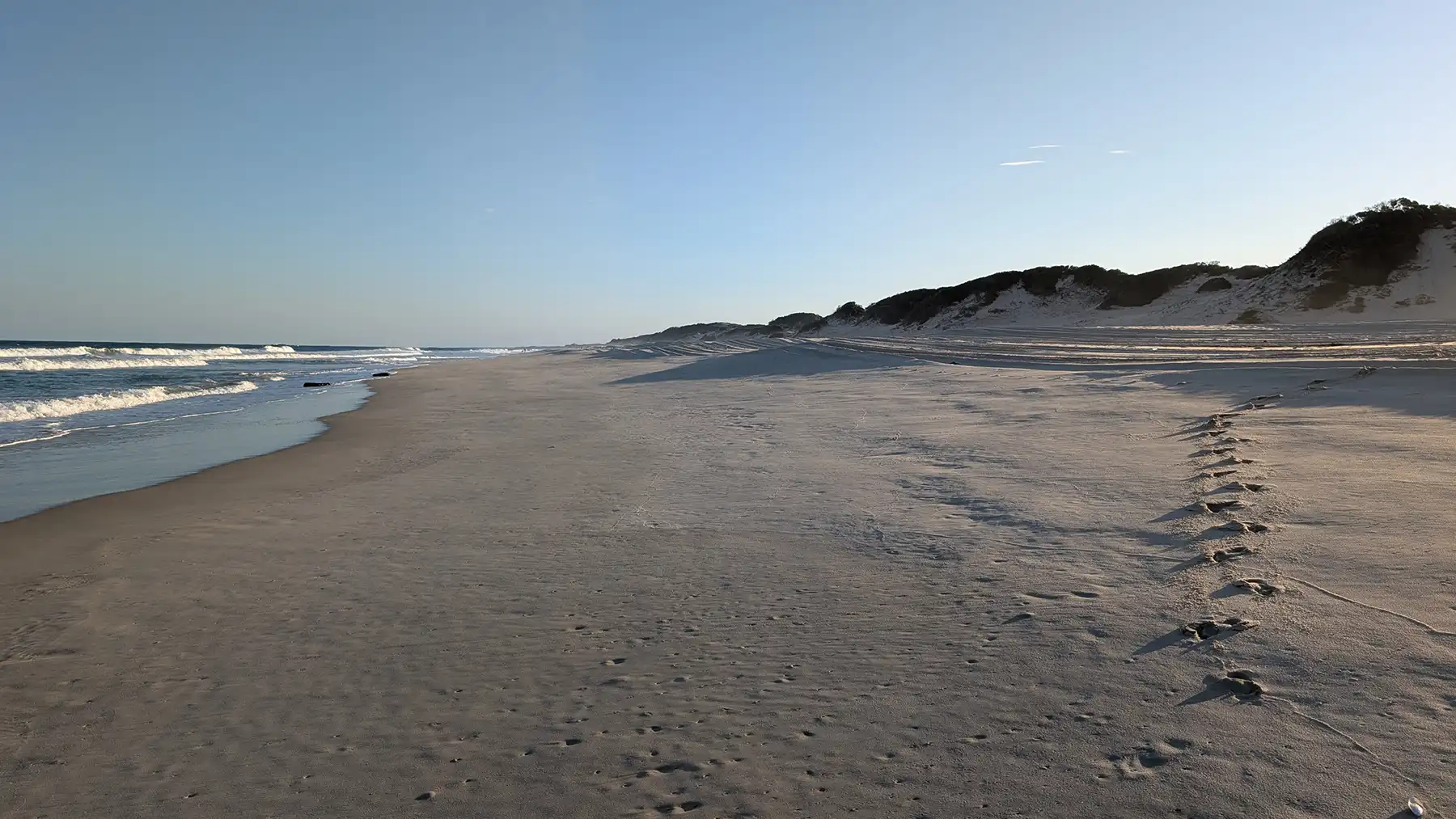
Golden afternoon light washes over the quiet shores of Calanga, where gentle waves meet untouched sands and the day drifts softly toward sunset.

Calanga, Mozambique FAQ's

Frequently Asked Questions for Travellers & Backpackers

Calanga is a remote coastal area in southern Mozambique where ocean, dunes, coastal forest, freshwater lakes and wetlands meet within a very small area. This rare combination makes it one of the most unique and unspoilt coastlines in the region.

Yes. The final access roads are sandy and remote, and a 4x4 vehicle or arranged transfer is strongly recommended, especially after rain.

Accommodation is limited to small lodges, eco-camps and hostels. Facilities are simple and off-grid, designed to blend into the natural environment.

No. Calanga has no shops, ATMs or banks. Visitors should bring all supplies and cash with them before arriving.

Mobile signal is very limited and often only available on high dunes. Internet access is unreliable or unavailable, making Calanga ideal for a digital detox.

The dry season (May–September) offers cooler temperatures and easier access. July to September is whale season, while summer months coincide with turtle nesting.

Activities include beach walks, dune hikes, sandboarding, birdwatching, swimming, kayaking on the freshwater lake and relaxed fishing.

Expect rich birdlife, monkeys, bushpigs and small mammals, particularly around forests, dunes and wetlands.

Yes. Between July and September humpback whales migrate past the coast and are often visible from the dunes.

Yes. Loggerhead and leatherback turtles nest on Calanga’s beaches during summer. They are protected and must never be disturbed.

Swimming is generally safe with caution. Ocean conditions can be rough at times, while the freshwater lake offers calmer waters.

Yes. Calanga is peaceful and safe, with few security concerns. The main risks relate to remoteness and natural conditions rather than crime.

Yes. Calanga is in a malaria area. Visitors should take preventative measures and consult a medical professional before travelling.

Pack sun protection, insect repellent, basic medical supplies, cash, food, drinking water, a torch and clothing suitable for hot days and cool evenings.

No. Driving on the beach is prohibited to protect dunes, wildlife and turtle nesting areas.

Yes. Small rural communities live inland and rely on fishing and farming. Visitors are encouraged to be respectful and supportive.

Calanga is not officially protected, making responsible tourism and local stewardship essential for its preservation.

There are no large predators. Normal awareness is advised regarding snakes, insects, ocean conditions and strong sun.

Leave no trace, avoid damaging dunes, respect wildlife and freshwater sources, and support local communities and eco-friendly accommodation.

Snorkelling in shallow rock pools is possible, but Calanga is not a major diving destination. Its appeal lies in wilderness rather than reefs.